What is Evidence?
A number of my chapter headers for Her Borrowed Grave, like the one below, refer to an Evidence log.

But what do I mean by Evidence?
In the case of my headers, not much really. I’ve noted the things that were found in the crime scenes. There is only so much information you can put in a header before it becomes unreadable.
So, I’ll use this post to elaborate on that information. In Her Borrowed Grave, the tennis ball is not really evidence, it’s just something that was found when examining the scene. It was logged, and everyone moved on to find something that would help solve the case.
Let’s pretend that the ball is vital evidence
When I put the actions together, it became a very cluttered infographic.
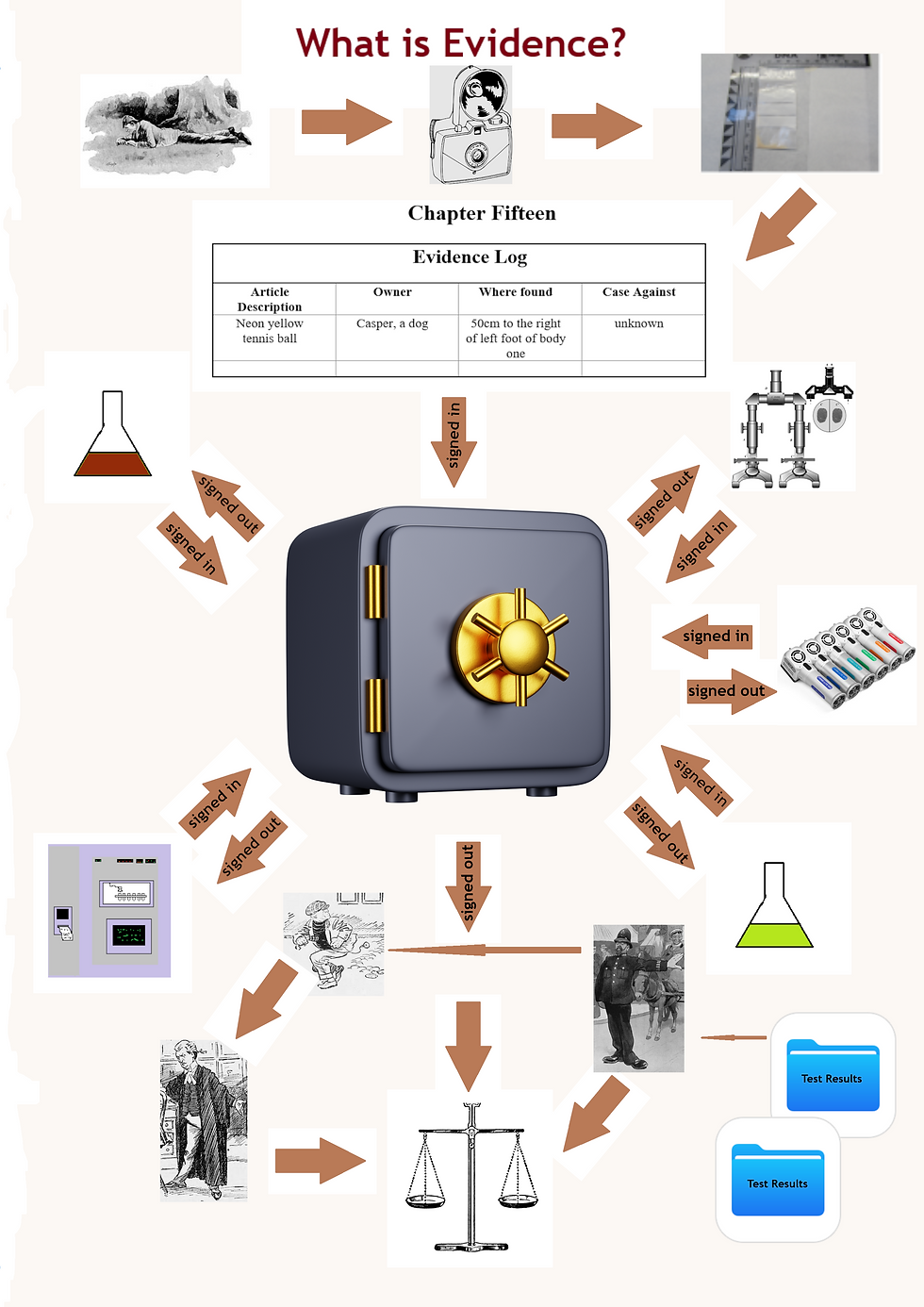
For Her Borrowed Grave, I just decided to leave a simple uncluttered header, that showed the police doing their job of searching for evidence, everything else can be assumed.
I’ll try and break down the actions.
First steps

First, you’ve actually got to search for evidence — though perhaps not by lying on the ground like our detective here — then flag it.
· When searching the wild rose bush, the Scene of Crime Officers, discover a neon-yellow tennis ball. It is flagged as ‘of interest’.
Next, the evidence must be photographed in situ. So that the detective can understand the relevance in the crime scene.
· Seeing the ‘of interest’ flag, the crime scene photographer takes a number of photographs of the ball, and its position relative to the body. They include the flag and the left foot of the victim.
Finally, in this sequence, the evidence must be collected in appropriate containers AND clearly labelled.
· Wearing nitrile gloves, the tennis ball is picked up and transferred to a Ziploc plastic bag. It is labelled with permanent marker with the date, the crime number, possible ownership, and the initials of the investigator who collected it.
· The bag is then sealed with tape.
When all the evidence is collected

It is noted in the Evidence Log, and SIGNED IN to the Secure Evidence Locker.
· The entire bag is placed in the locker. The Evidence officer, signs to ensure chain of custody and lists in the log where the tennis ball is located.
From there

It can be SIGNED OUT to have tests performed on it.
· Starting with non-destructive tests, like measuring and weighing (top right).
· It can be exposed to a crimelite (middle right) to see if any body fluids are present.
· If fluids are seen, then tests for saliva (bottom right)
· and blood (top left) are performed.
· Then finally DNA analysis (bottom left) if necessary.
After each test, the evidence is SIGNED IN as it returns to the locker.
After the tests

Reports are written, and checked, then handed to the police.
· The evidence remains in the locker, in its assigned place.
The police

Will hopefully be able to use the reports on the evidence to identify and arrest a suspect.
· Let’s hope they don’t decide to arrest Casper, the chocolate Labrador, owner of the tennis ball.
The Suspect
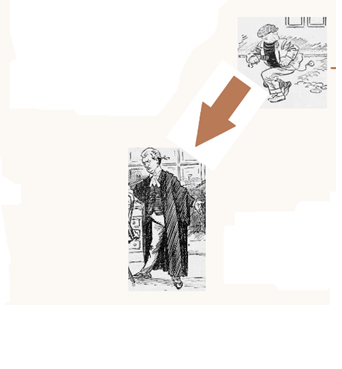
Will hire a lawyer,
who will ask to see the reports and the evidence.
· They may request further tests.
· Which will require the evidence to be SIGNED OUT, the test performed
· and then, on return, SIGNED IN to the Secure Evidence Locker.
Once all sides are satisfied

The evidence, the reports, the police, the criminal and the lawyer, all end up in a Court of Law. A jury will listen to the reports on the evidence, and why the police came to the conclusion that the suspect is the only possible person to have committed the crime. The jury will weigh up what they have heard, and decided on guilt.
All that, from just one tennis ball.
However
The most important part of evidence, is that no matter how complicated the infographic gets, if any part of that chain is broken, the evidence is useless. If one signature is missed, signing in or out, then that piece of evidence can no longer be used in a Court of Law.


Comments